Form Recovery and Wellness will be closed for the Songkran holidays on April 14th and 15th. Feel free to leave us a message, and we’ll get back to you as soon as possible on April 16th
6 Safe Physiotherapy Exercises for Elders at Home (Recommended by Form Recovery & Wellness)
As people age, staying active becomes less about intensity and more about safe, consistent movement. Physiotherapy for elders focuses on maintaining mobility, balance, and strength while minimizing the risk of falls or injury.
Physiotherapists at Form Recovery & Wellness regularly recommend the following safe home exercises for elders as part of structured physiotherapy programs. These exercises are simple, low-impact, and suitable for most older adults when performed correctly.
Important: Elders with medical conditions, balance issues, or recent surgery should consult a licensed physiotherapist before starting any exercise program.
Bangkok offers access to internationally trained physiotherapists who specialize in elder care, mobility training, and fall prevention. Clinics like Form Recovery & Wellness focus on safe, evidence-based physiotherapy programs designed specifically for older adults—both in-clinic and through guided home exercise plans.
6 Safe Home Exercises for Elders (Physiotherapist-Recommended)
1. Seated Marching
Purpose: Improves hip strength and circulation How to do it: Sit upright in a chair. Slowly lift one knee, lower it, then alternate. Repetitions: 10–15 per leg
Why it helps: Supports walking ability and reduces lower-body stiffness.
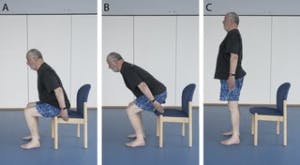
2. Sit-to-Stand
Purpose: Builds leg strength for daily movements How to do it: From a chair, stand up slowly using your legs, then sit back down with control. Repetitions: 8–12
Why it helps: This exercise directly improves independence for getting up from chairs or beds.
3. Heel Raises
Purpose: Strengthens calves and improves balance How to do it: Hold onto a chair or wall. Lift your heels, then slowly lower them. Repetitions: 10–15
Why it helps: Calf strength plays a key role in balance and fall prevention.
4. Ankle Circles
Purpose: Maintains ankle mobility and circulation How to do it: While seated, lift one foot slightly and gently circle the ankle in both directions. Repetitions: 10 circles each direction, per foot
Why it helps: Reduces stiffness and supports safer walking.
5. Shoulder Rolls
Purpose: Relieves neck and shoulder stiffness How to do it: Slowly roll shoulders backward, then forward. Repetitions: 10 each direction
Why it helps: Commonly recommended for elders with desk-related or postural tension.
6. Standing Balance Hold
Purpose: Improves balance and confidence How to do it: Stand near a stable surface. Hold a comfortable standing position without support for up to 30 seconds. Repetitions: 2–3 holds
Why it helps: Balance training is one of the most effective ways to reduce fall risk in older adults.
Safety Guidelines for Elders Exercising at Home
Physiotherapists at Form Recovery & Wellness recommend the following safety rules:
Move slowly and with control
Stop if you feel pain (not mild muscle effort)
Use support (chair, wall) when needed
Breathe normally—do not hold your breath
Consistency matters more than intensity
If dizziness, sharp pain, or loss of balance occurs, stop and seek professional advice.
When Elders Should See a Physiotherapist
Home exercises are helpful, but professional physiotherapy is recommended if an older adult experiences:
Frequent falls or fear of falling
Persistent joint or back pain
Reduced mobility after illness or surgery
Balance problems or muscle weakness
Difficulty with daily activities
A physiotherapist can create a personalized, progressive program that adapts as strength and confidence improve.
Conclusion
Physiotherapy for elders is not about pushing limit; it’s about safe, consistent movement that preserves independence and confidence. Simple home exercises, when guided by professional physiotherapy principles, can make a meaningful difference in daily life.
For older adults in Bangkok, working with a physiotherapy clinic experienced in elder care ensures exercises remain safe, effective, and adapted as needs change.